Why Your Personal Email Address Is More Valuable Than You Think.
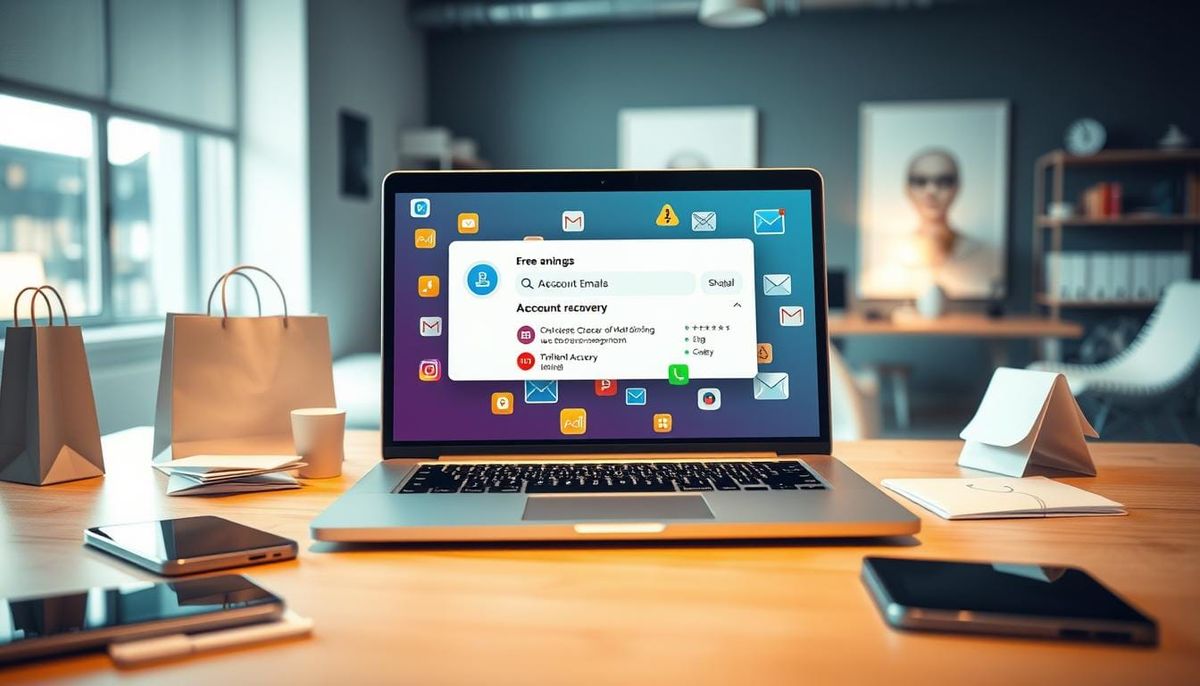
A single personal email address can link our conversations, purchases, account resets, and brand subscriptions. How much of our digital lives can one address connect? It can identify us across services, receive account recovery messages, and tie activity together across settings. That reach makes it useful, but it also raises personal risks. Businesses can also gain value from a person who chooses to hear from them. An active subscriber is a person who opens, clicks, or converts, rather than every address on a mailing list. We will look at the risks, the business value, and practical ways to make better choices. Treating an address as a valuable identifier helps us make more deliberate choices about where we use it.
Personal email address connects shopping, messages, and account recovery
Key Takeaways
- One address can connect accounts, messages, purchases, and recovery settings.
- Knowing an address differs from controlling the inbox behind it.
- Active subscribers can create measurable value for a business.
- Businesses can estimate list value with revenue, active subscribers, and retention.
- Unique passwords, MFA, and careful sharing help protect our inboxes.
- Aliases can limit exposure, but they do not make phishing messages safe.
Why our personal email address is more than a contact detail
If someone takes control of an inbox, they may be able to reach far beyond the messages stored there. Email connects account recovery, financial services, shopping, and personal correspondence, so inbox access can matter more than the address itself.
Knowing an address alone does not give someone access to its inbox. Control of the inbox can help an attacker reset passwords and reach other accounts. In 2024, U.S. consumers lost almost $16 billion to account takeover fraud, and 5.1 million people were victims. Reports of account takeover rose more than 36% from 2023.
The FTC received more than 1.1 million identity-theft reports in 2024. Those included 449,032 credit-card reports and 114,608 bank-account reports. The figures show why account recovery deserves care, even when an email address seems ordinary.
Keep the inbox attached to accounts we expect to use, and review which recovery address each important account relies on.
An inbox may hold password reset links, notices from a bank, order receipts, and private conversations. Account takeover figures for 2024 show the scale of the wider risk, while the address alone remains only one piece of it.
When a service offers a choice, we should use an inbox we can still reach and protect. Check the recovery address on each key account, especially financial and shopping services.
Keep the inbox attached to accounts we expect to use, and review which recovery address each important account relies on.

Take Greater Control of Your Personal Communications
How widely our email addresses travel online
An address can reach a data broker through ordinary activities such as joining a loyalty program or using an app. Brokers may combine it with other details to build profiles, though not every service shares information in the same way.
Profiles may include names, phone numbers, current and past addresses, purchase history, online activity, and public-record information. Apps, loyalty programs, retailers, and third-party platforms may all contribute. Service terms can permit sharing with partners, so we should read them before signing up.
Common routes include:
- Entering an address in an app or online service.
- Joining a store loyalty program or entering a sweepstakes.
- Making a purchase through a retailer or third-party platform.
- Allowing an app to connect with another service.
Those routes can create links between an address and our interests or buying habits. A U.S. federal privacy law does not set one rule for all data brokers. State privacy laws form a patchwork, and rules can differ by state and type of data.
We can check a service’s privacy terms before sharing an address. Look for wording about sharing, third-party partners, or how the service uses information. The same terms may explain how to limit or remove some data.
Before entering an address, check the service’s privacy terms for language about sharing or third-party partners.

Take Greater Control of Your Personal Communications
Email, phishing, passwords, digital communication, spam: why our address matters
A familiar address can make a convincing phishing message feel routine, especially when it appears beside details we recognize. Phishing scams use social engineering, or tricks that push us to trust a message or act quickly. Familiar details can make a fake request look like normal digital communication.
An email address is often public or shared, so it is not secret like a password. A stolen email-password pair or an attacker inside the inbox creates a much greater danger. Email account takeover can let an attacker read, send, delete, or forward messages, change recovery settings, and reset other passwords.

Take Greater Control of Your Personal Communications
How phishing scams and social engineering use familiar details
Attackers may copy a store’s style, name a recent purchase, or claim a delivery failed. A link can lead to a fake sign-in page that steals credentials. Other messages ask us to approve a sign-in or share a code.
Credential theft, phishing, and abuse of OAuth tokens are common ways attackers gain or keep control of email accounts. OAuth tokens let services access an account without asking for its password each time. An unexpected request to sign in or approve access deserves a pause.
Why data breaches make an address more exposed
Data breaches can expose contact details and passwords together. The Identity Theft Resource Center counted 3,322 U.S. data compromises in 2025, a record and 79% more than five years earlier. The 2013 and 2014 Yahoo intrusions ultimately affected all 3 billion accounts, exposing addresses, phone numbers, birth dates, and hashed passwords.
In the first half of 2026, the center counted 1,803 U.S. data compromises and 471.2 million victim notices. An estimated 275 million notices tied to the Instructure Canvas incident. Of breach notices, 76% did not state how the attack happened.
Verizon reported that credential abuse was the first access method in 22% of breaches in its 2025 report. Stolen credentials appeared in 88% of basic web application attacks. These figures make reused passwords a serious concern.
After a breach notice, we can take these steps:
- Read the notice and identify which details were exposed.
- Change any reused password on affected and other accounts.
- Watch account activity for sign-ins or changes we did not make.
- Start a recovery plan at IdentityTheft.gov.
IdentityTheft.gov creates a personalized recovery plan. An account there lets users track progress and get pre-filled forms and letters.
Why an email address is not as sensitive as a password or home address
An address can identify us, but it does not prove that we control an account. A password can open the account, while a home address can point to our physical location. The risks depend on what else appears beside the email address.
Breach-notification laws also vary. As of January 1, 2026, 20 states set deadlines of 30-60 days, while 31 states used broader timing language. Thirty-six states required reports to an attorney general or another state agency.
As of that date, 22 states included biometric identifiers and 24 included medical information in these laws. Twenty-four states allowed private legal action for violations, and six required free credit monitoring. Rules differ by place, covered data, and situation.
After a breach notice, use IdentityTheft.gov to create a recovery plan and follow the actions that match the exposed information.
What businesses can earn from one email address
Email can remain commercially valuable even when marketers give other channels more attention. A business can use a permission-based list to reach customers again, but reported returns do not promise the same result for every company.
A person’s address can support repeat contact without relying on social-media algorithms or paid impressions. That continuing route can help a business share useful offers, updates, and service information. Value depends on what subscribers do and whether they choose to keep receiving messages.
Email’s measurable return for marketers
The Secret Lives of Marketers survey included 1,500 marketers. Twenty percent named email and CRM marketing as their top return-on-investment channel, while 22% prioritized email, placing it ninth. Around 1% said they lacked tools to track returns by channel.
For each dollar spent on email marketing, 35% reported returns of $10-$36. Another 30% reported $36-$50, and 5% reported more than $50. These are survey results, not a promise that every campaign will earn those amounts.
Global email marketing revenue was projected to reach $14.5 billion by the end of 2026. The scale points to a mature business channel, but a single company’s results still depend on its audience and offer.
Why consumers still choose email from their favorite brands
Forty-five percent of consumers named email as their preferred way to hear from favorite brands. Email also gives readers a record they can return to, such as a receipt, product detail, or event notice.
That preference does not mean customers want every message. A useful note at the right time can support a relationship; a flood of irrelevant offers can weaken it. The reader’s choice to remain on the list matters.
How an email list remains reachable after sign-up
After a person signs up, a business can send messages directly to that inbox, subject to consent and applicable rules. The route does not rely on a social platform showing a post to its followers. It can also support follow-up after a purchase or an unanswered visit.
Companies still need to earn attention with clear, relevant messages. A subscriber’s commercial value depends on relevant communication and an ongoing choice to stay subscribed.
How to calculate the value of an active subscriber
We can estimate subscriber value with three inputs: attributable revenue, active subscribers, and how long they remain active. Active subscribers are people who open, click, or convert, not every address stored on a list.
Monthly value equals annual email-attributed revenue divided by 12, then divided by active subscribers. Lifetime value equals monthly value multiplied by estimated active lifespan in months. List value equals lifetime value multiplied by active subscribers.
Monthly value from email-attributed revenue
Suppose a business earns $240,000 in annual email-attributed revenue and has 10,000 active subscribers. Divide $240,000 by 12, then by 10,000. The result is $2 per address each month.
Email-attributed revenue means sales credited to email under the business’s own tracking method. We should use the same method each time we calculate, so changes reflect performance rather than a new counting rule.
Lifetime value from subscriber retention
At 5% monthly churn, this illustration estimates an active lifespan of about 20 months. At $2 per month, lifetime value is $40 per subscriber. These figures are an example, not a benchmark or forecast.
If monthly churn falls to 4%, the example lifespan becomes 25 months. Lifetime value rises to $50. At 6% churn, the lifespan is about 17 months and lifetime value is about $33.
For this illustration, a one-point monthly churn reduction adds $100,000 to total list value. A one-point increase cuts it by about $67,000. Changes in retention can shift the estimate even when the subscriber count stays fixed.
Total list value from active subscribers
Multiply the $40 lifetime value by 10,000 active subscribers, and the example list value is $400,000. At 4% churn, the $50 lifetime value produces a $500,000 list value. At 6% churn, the roughly $33 value gives about $333,000.
If revenue per address rises 10%, monthly value becomes $2.20. At 5% churn, that makes lifetime value $44 and list value $440,000. Combining the higher revenue with 4% churn gives $55 per subscriber and $550,000 for the list.
These amounts illustrate how revenue and retention affect the estimate; they do not predict future sales. Recalculate with our own click, purchase, and churn records instead of treating the example as a forecast.
What increases or reduces email list value
List value grows when relevant messages earn more engagement and subscribers have a reason to stay. Useful contact can improve revenue per address and retention, while poor timing or unclear consent can drive people away.
Twenty-seven percent of marketers prioritized marketing database growth. That goal works best when new sign-ups receive clear value and existing subscribers get messages that fit their interests. More addresses alone do not guarantee a stronger list.
Use behavior to make messages more relevant
We can group subscribers by what they view, click, buy, or request. A person who browses running shoes may welcome shoe updates, while a recent buyer may need care tips instead of another sales pitch.
Triggered journeys send a message after a clear action, such as joining a list or leaving an item in a cart. These messages can arrive when the detail is still useful, rather than on a fixed schedule alone.
Reduce churn with welcome and re-engagement journeys
A welcome message should set expectations and explain what comes next. It can introduce the brand, show how to manage preferences, and point to helpful content. Twenty-two percent of brands included loyalty or advocacy in welcome and onboarding messages.
Re-engagement messages can offer inactive subscribers a simple choice: keep receiving updates or leave the list. A quiet, direct note can protect trust better than a long run of repeated promotions.
Only 9% of brands had a fully integrated loyalty program across the customer journey. Loyalty works best when the experience connects sign-up, purchases, service, and rewards instead of treating each step as separate.
Build trust through clear consent and data-use explanations
People need to know what they are signing up for and how their details will be used. Yet 32% of brands did not communicate a privacy policy or collect proper consent. Clear language can prevent confusion before the first message arrives.
We should name the type and pace of messages at sign-up. If subscribers can change preferences or leave easily, they have more control over the relationship.
Make sign-up opportunities useful across the customer journey
Useful sign-up forms can appear where people already find value. Fifty-four percent of consumers discovered new brands on mobile, so forms should work well on small screens. The value exchange should be clear, such as early product news for an email address.
Possible sign-up touchpoints include:
- A header call to action that leads to a sign-up page.
- An embedded form beside relevant articles or product details.
- A timed prompt, such as one that appears after 45 seconds.
- A quiz that offers tailored results by email.
A timed prompt should not keep appearing to people who already subscribe. Make every sign-up prompt clear about what the subscriber will receive and how their information will be used.
How we can protect our address and inbox
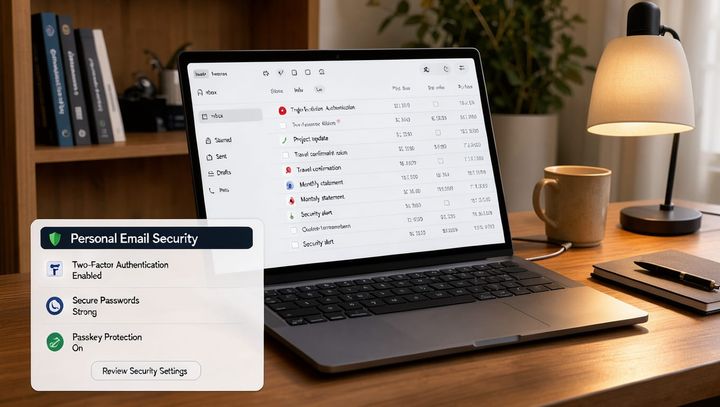
Strong inbox security starts with unique credentials and a second factor, because password-based attacks remain common. More than 97% of identity attacks in the first half of 2025 involved password spraying or brute force. Modern MFA reduces identity-compromise risk by more than 99%, but it cannot stop every attack.
More than 99% of Microsoft’s 600 million daily identity attacks in its 2024 reporting were password-based. Use a unique password and MFA, or a passkey where available, to make sign-in harder to steal.
Use unique passwords, password managers, and multi-factor authentication
A password manager creates and stores a different password for each account. That way, a password stolen from one site cannot unlock every other account. MFA adds a second check beyond the password, such as an app prompt or security key.
Passkeys replace passwords with a cryptographic key pair and do not use a shared secret. They use public-key cryptography and are designed to resist phishing. A passkey can live on a phone, computer, or hardware security key.
In a 2024 survey, 53% of people had enabled passkeys on at least one account, and 22% had enabled them on every eligible account. The FIDO Alliance passkey guide explains how passkeys work and how they may sync across devices or stay bound to one device.
A synced passkey may return on a replacement device through a platform account, such as iCloud Keychain or Google Password Manager. For a device-bound passkey, registering another authenticator can provide a backup. A password manager can also help us keep unique passwords for accounts that do not support passkeys.
Filter spam and verify senders before responding
Spam filters can move unwanted messages out of the inbox, but a message that passes the filter can still be fake. Sender verification means checking whether the sender and request make sense before we act.
Do not rely on a display name alone. If a message asks for payment, a password, or a sign-in code, contact the company through its app or a number we already trust. That step avoids using contact details supplied in a suspicious email.
Limit exposure with careful sharing and email encryption
The National Cybersecurity Alliance recommends a separate address for shopping, subscriptions, and online orders. Some data brokers offer individual opt-out forms, and we may need to send requests to several brokers. Those steps can reduce exposure, but they cannot erase every copy of an address.
Email aliases forward messages without showing our primary address. SimpleLogin offers 10 free aliases and a $35-per-year plan with unlimited custom domains. Addy.io offers unlimited aliases on a bandwidth-limited free plan and a $12-per-year paid plan.
Firefox Relay offers five free aliases and a $0.99-per-month Premium plan with one custom domain. DuckDuckGo Email is free, offers unlimited aliases, and supports replies through an alias. Apple Hide My Email offers unlimited aliases with iCloud+, starting at $0.99 per month, and requires iCloud.
SimpleLogin and Addy.io offer paid options for people who want custom domains or more features. Each service handles aliases in its own way, so we should test one before using it for an important account. A disabled alias differs from a deleted account: a permanent forwarding alias may still receive password resets and other messages.
Gmail includes 15 GB of free storage shared across Gmail, Google Drive, Google Photos, and Google Docs. Yahoo Mail provides 20 GB of free storage, down from 1 TB in 2025. Storage matters when we rely on an inbox for job messages, receipts, or account notices.
Email encryption can protect message contents in some situations, but it does not stop phishing. It also cannot stop someone with inbox access from acting as the account holder. Before relying on a device-bound passkey or alias for important accounts, keep a backup authenticator or recovery route ready.
Use these account checks:
- Give each important account a unique password.
- Turn on MFA or set up a passkey where available.
- Review recovery options and keep them current.
- Use spam controls and verify senders through a trusted channel.
- Test an alias before using it for a critical account.
MFA lowers takeover risk, but adversary-in-the-middle phishing, SIM swapping, and session-token theft can bypass some methods.
Keep a backup authenticator or a recovery route ready before relying on a device-bound passkey or an alias for important accounts.
Conclusion
Our email address earns its value through the relationships and accounts connected to it, not just the messages it receives. Its personal value depends on our control, while its business value depends on trust and a subscriber’s choice to stay.
We can start with one small check rather than changing every account at once. Today, check the recovery options on our primary inbox and turn on an available second sign-in factor.
FAQ
Can I use one email address for shopping and important accounts?
Yes, but a separate shopping address can reduce links between purchases and our primary inbox. We should keep critical account recovery on an address we actively monitor. That way, a password reset or bank notice does not get lost in store offers. A separate address also makes it easier to spot which services send unwanted messages.
Do email aliases stop phishing?
No, aliases do not stop phishing. They can limit where our primary address appears, and we can disable an alias that starts receiving spam. A fake sender can still use a convincing name or link, though. We should check unexpected requests through a trusted app or contact method instead of trusting the alias alone.
What should I do if my email address appears in a data breach?
Follow the breach notice, change reused passwords, and check account activity. The notice can explain which details were exposed and what steps fit the incident. We can use IdentityTheft.gov to create a tailored recovery plan and track actions with an account. Watch for sign-ins, password changes, or messages we did not send.
How often should I change my email password?
Change a unique email password promptly if it is exposed or reused; otherwise, focus on keeping it unique and secure. A password manager makes different passwords practical, so one breach does not put every account at risk. We should also review the inbox’s recovery options and turn on MFA or a passkey when offered.
Can a passkey be recovered if I lose my phone?
Sometimes, depending on how the passkey was set up. A synced passkey may be restored through a platform account, such as iCloud Keychain or Google Password Manager. A device-bound passkey stays tied to one device, so we should register another authenticator in advance. A hardware security key can serve as a separate sign-in option.
Does MFA completely prevent account takeover?
No, MFA lowers risk but does not prevent every takeover. Adversary-in-the-middle phishing can trick us into sharing a live sign-in, while SIM swapping can affect text-message codes. Attackers may also steal a session token after sign-in. A passkey can resist phishing, but we still need safe recovery options and careful checks.
Is a free email account enough for a job search or important messages?
Yes, a free account can work if we can access it, identify senders, and recover it when needed. Check available storage because Gmail provides 15 GB shared across several Google services, while Yahoo Mail provides 20 GB. Keep job messages organized and make sure the inbox’s recovery details stay current.
Take Greater Control of Your Personal Communications
"Protecting your personal email is just one part of taking control of your personal security. Discover the other areas you and your family should consider protecting in our guide to the "5 Pillars of Personal Protection."
Comments ()