How to Manage Your Mail When You're Away From Home
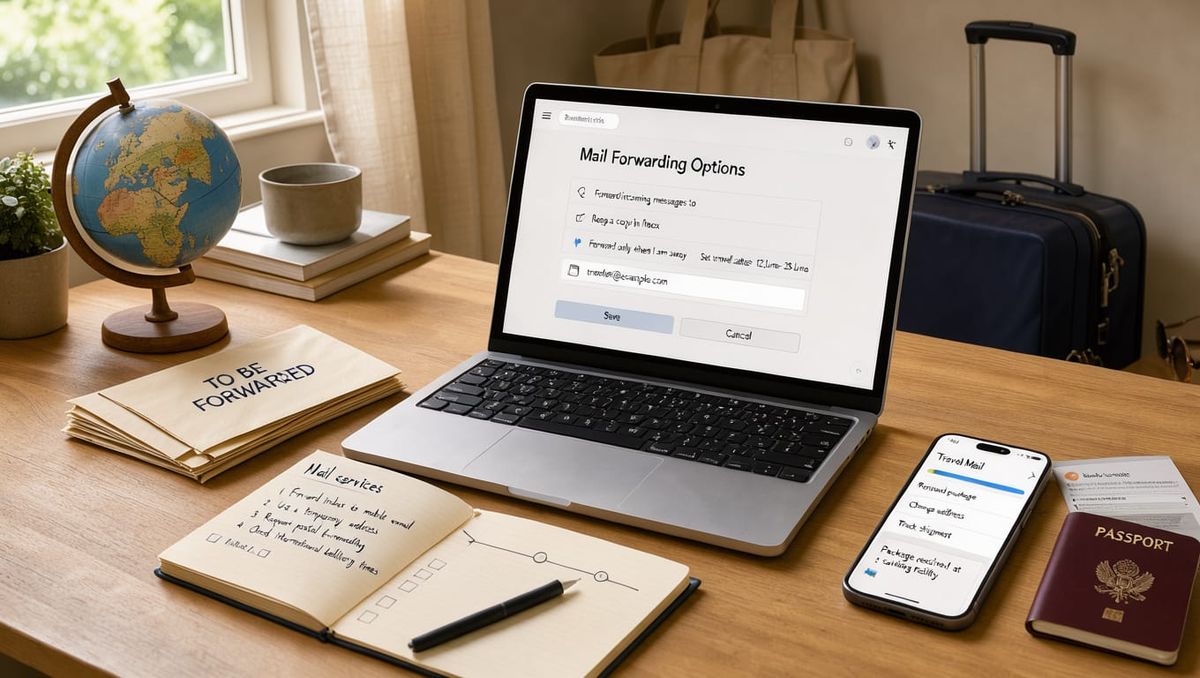
We can keep mail secure while we travel. We can pause delivery for a short absence, forward it for a longer stay, or ask someone we trust to check it. The right choice depends on how long we will be away and where we can receive mail.
Mail forwarding is a service that reroutes eligible mail from one address to another. A hold pauses delivery at home, while forwarding sends eligible mail elsewhere. A trusted helper can be useful when neither option fits our plans. Each choice solves a different problem.
To decide how to manage mail, we should consider the trip dates, destination, and mail we expect. A plan also supports identity theft protection by reducing the time sensitive mail sits unattended.
Key Takeaways
- Use USPS Hold Mail for an eligible absence of 3 to 30 days.
- Consider forwarding when we will stay away longer or need mail elsewhere.
- Clear the mailbox and make a plan for deliveries before departure.
- Use Informed Delivery to view letter images and check package status.
- Give a trusted helper clear limits and safe handling instructions.
- Choose an option that fits both the trip length and where we will be able to receive mail.
Prevent mailbox overflow before you leave
A mailbox left full while we are away can signal that nobody is home, so we should arrange for mail to be cleared before it reaches capacity. Start before departure, while there is time to set up help or a postal hold.
Clear existing mail and check how much the box can hold. Ask someone we trust to collect mail on an agreed schedule, or arrange USPS Hold Mail when that better fits the trip. If accumulated mail exceeds mailbox capacity, the carrier leaves PS Form 3849 and returns the overflow to the local Post Office.
Overflow may go to the local Post Office instead of being left at the door.

Discover Flexible Ways To Manage Your Physical Mail and Mailing Address
Good mailbox overflow prevention can support vacation mail security and make the home look less unattended. We should also ask our helper to collect notices, not just letters and parcels.
Keep the mailbox area clear and make sure the helper can reach it safely. Make sure the person checking the mailbox knows where to leave any PS Form 3849 notice.
How to Manage Your Mail When You're Away From Home
For an eligible address, USPS Hold Mail is a free way to pause all letter and package delivery for an absence of 3 to 30 days. The request covers everyone at that address, not one person or selected package.
USPS Hold Mail pauses all letters and packages delivered to an eligible address. We cannot use it to stop only one piece of mail. At least 3 days must pass between the end of one hold and the start of another.

Discover Flexible Ways To Manage Your Physical Mail and Mailing Address
Use USPS Hold Mail for absences of three to 30 days
We can submit a request up to 30 days before its start date, or as early as the next scheduled delivery day. An online request before 2:00 A.M. Central Time can start that Postal business day.
A request after 2:00 A.M. Central Time can start no earlier than the next Postal business day. Postal business days run Monday through Saturday, except Postal holidays. A later Change of Address submission overrides an existing hold.
Submit a Hold Mail request and choose how to receive your mail
Online requests require a USPS.com account and identity verification. If online requests are unavailable for our address, we must submit PS Form 8076 in person.
- Sign in to a USPS.com account or create one.
- Complete the required identity verification.
- Submit the hold start and end dates.
- Save the confirmation details for later changes.
At the end, we can choose carrier delivery on the last day or pickup at the local Post Office. These are different return choices. Mail held for pickup must be collected within 10 days or it goes back to senders.
If we pick up held mail in person, regular delivery resumes the next Postal business day. Picking it up before the requested end date cancels the hold, and regular delivery resumes the next Postal business day.
If held mail exceeds the box’s capacity, the carrier leaves PS Form 3849 and returns overflow to the local Post Office. We can change or cancel a request through its confirmation-email link or by calling the Customer Care Center.
A request without its confirmation number must be changed or canceled in person at a local Post Office with acceptable identification. A Change of Address does not block a normal hold at a new or current address. If we now live at an old address, cancel its forwarding order before requesting a hold there.
Save the confirmation number, since changes or cancellations without it require an in-person visit with acceptable identification.
Choose a mail forwarding service for longer trips
For a trip longer than 30 days, a temporary Change of Address or a forwarding service can send eligible mail to the place where we will be staying. These options differ in timing, price, and how mail moves.
A temporary Change of Address can run from 15 days to one year and has a $1.10 identity verification fee. It is not the same as a permanent move. Premium Forwarding Service Residential sends eligible mail to a domestic address in weekly shipments.

Discover Flexible Ways To Manage Your Physical Mail and Mailing Address
Use a temporary change of address for extended absences
For a permanent domestic move, Extended Mail Forwarding can extend forwarding beyond the first 12 months. It extends forwarding for 6, 12, or 18 months, with 18 months as the total extension limit.
Extended Mail Forwarding costs $26.00 for six months, $39.00 for twelve months, or $52.00 for eighteen months. After an initial six- or twelve-month term, another six-month extension costs $26.00.
The service continues forwarding First-Class Mail, USPS Ground Advantage Commercial items, and Priority Mail. It is for permanent domestic Change of Address requests, not a substitute name for temporary forwarding.
Arrange weekly forwarding to a temporary address
Premium Forwarding Service Residential is for domestic addresses. Enrollment costs $26.40 online or $28.70 at a Post Office, and the enrollment fee is non-refundable.
Weekly service costs $29.70 for each week, whether we enroll online or in person. It runs for at least two weeks and up to one year. Another request can extend service beyond one year.
Residential forwarding usually begins the Wednesday after enrollment. Online enrollees should allow 7-10 days for the first Priority Mail delivery. Registered Mail and Priority Mail Express are rerouted right away.
Priority Mail is rerouted right away or sent with the weekly shipment, whichever is faster. First-Class Mail, periodicals, and marketing notices move weekly. Large First-Class Mail, Media Mail, and USPS Ground Advantage packages are forwarded free with the service.
Premium Forwarding Service Residential is not available for APO/FPO/DPO or Guam addresses. An active Hold Mail request or temporary or permanent forwarding order cannot run at the same time as this service.
Premium Forwarding Service Commercial is for business mail. It has a $26.40 annual enrollment fee, while postage is charged separately based on mail volume, shipment frequency, and requested mail class.
Commercial forwarding offers daily Monday-through-Saturday, weekly, or monthly shipments. Check that the destination is domestic and that no active hold or forwarding order conflicts with the service we choose.
Monitor deliveries with digital mail scanning and alerts
Digital mail tools let us check expected letters and package status without being at home, but a preview does not confirm that a piece has arrived. Informed Delivery offers USPS previews to eligible customers.
Informed Delivery shows grayscale images of the address side of qualifying letter-size mail. USPS processes those pieces through automated equipment, and the physical mail may arrive several days after its notification.
Preview letters and track packages with Informed Delivery
Eligible residential, business, and PO Box customers can use the service. It can also show package delivery-status information, so we can follow expected shipments while away.
Notifications may appear by email, on the Informed Delivery dashboard, or in the USPS Mobile application. A letter image tells us that USPS processed a mailpiece, not that it reached our box that day.
Manage mail remotely through a virtual mailbox
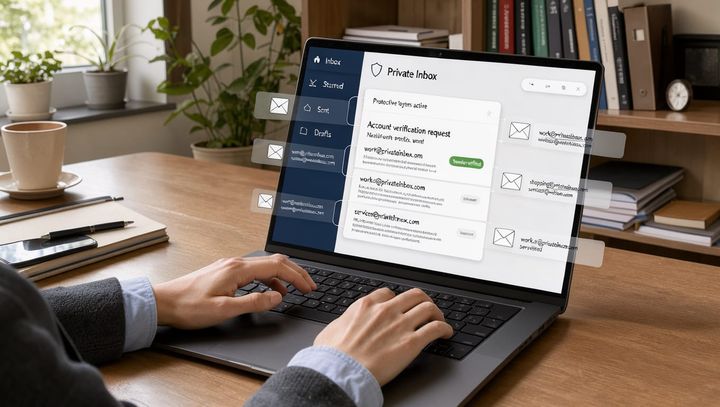
A virtual mailbox provider may receive physical mail for us and give us access through a computer, tablet, or smartphone. Some providers offer forwarding, pickup, shredding, or disposal.
Options depend on the provider and service we choose. We should check how the provider handles mail before relying on it for documents or deliveries we need quickly.
Digital mail scanning can help us plan, but physical mail still follows its delivery route. Treat a notification as a planning aid, and verify the physical delivery status before making time-sensitive decisions.
Make package delivery arrangements before traveling
Before leaving, check the expected delivery dates for each package and decide where it can be received safely. Shipment options vary, so we should check each carrier and package.
USPS, UPS, and FedEx each offer tools recipients can check for available shipment options. A tracking estimate does not guarantee that a package can be rerouted, held, or delivered elsewhere.
Track and reschedule packages expected during your trip
Review tracking before departure and note which packages may arrive while we are away. USPS Tracking, UPS My Choice, and FedEx Delivery Manager can show options for eligible shipments.
USPS delivery can be rescheduled after a missed delivery. Each shipment has its own rules, so an option shown for one parcel may not apply to another.
Coordinate delivery locations and senders in advance
Choose a suitable delivery location or recipient before the package ships. When possible, contact the sender early to ask about a different delivery address or timing.
We can ask the carrier whether that specific package qualifies for a redirect or hold. A carrier may limit changes based on the shipment, its status, or the service used.
For an important delivery, agree on who can receive it and how we will learn that it arrived. Confirm any change with the carrier or sender before departure, rather than assuming a tracking estimate will change the delivery.
Arrange trusted mail pickup and identity theft protection
A trusted person can help keep mail from accumulating, but clear limits and handling instructions protect both our home and our information. Agree on the details before handing over access.
Set a visit schedule and explain where collected mail should go. Tell the helper what to do with packages and how to reach us if a delivery or security issue comes up.
Give a trusted person clear instructions for mail pickup
A short written checklist can prevent mix-ups while we are away. It should cover these tasks:
- Collection schedule and agreed visit times.
- Where to store collected mail inside the home.
- What to do with packages and delivery notices.
- How to contact us about delays or safety concerns.
- How to keep sensitive paperwork private.
Give the helper access only to the tasks we agreed on. Keep private papers in a secure place and limit who can read or handle them.
Protect sensitive documents from theft and exposure
Shred documents with personal details when we no longer need them. If we suspect someone stole mail, report it to the U.S. Postal Inspection Service.
The Inspection Service accepts reports about suspected mail theft. Its guidance also urges people to protect mail and checks; the Postal Inspection Service and ABA announcement discusses reporting suspected check fraud.
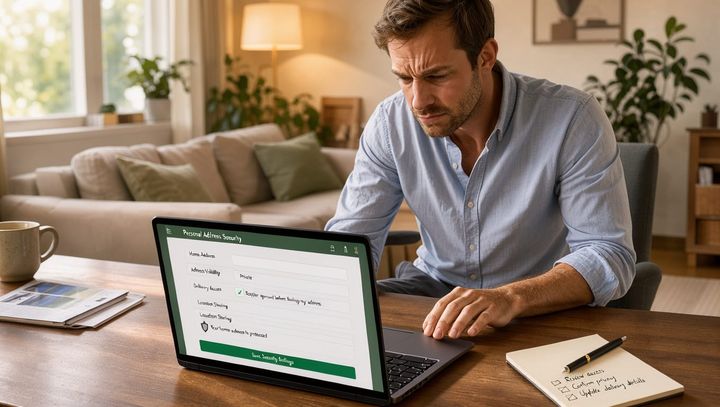
For suspected identity theft, IdentityTheft.gov is the Federal Trade Commission’s reporting and recovery resource. Leave only the access and personal information the helper needs to complete the agreed tasks.
Keep private mail out of view and give a helper only the access needed for agreed tasks.
Conclusion
The right mail plan is the one that keeps deliveries secure without sending them somewhere we cannot access. Match the arrangement to the trip length and destination, then make a backup plan for packages or important documents.
A few minutes spent checking dates and choosing a reliable contact can prevent missed deliveries and unwanted exposure. We do not need to use every tool; we need a plan that fits the mail we expect.
Before we leave, confirm the dates, destination, and backup contact for the arrangement we chose.
FAQ
How far ahead should we arrange mail management before a trip?
We can submit a USPS Hold Mail request up to 30 days before its start date. For online residential forwarding, allow 7-10 days for the first Priority Mail delivery. That time helps the first weekly shipment reach the temporary address. We should set up the arrangement as soon as our dates and destination are firm.
What should we do if our trip lasts longer than 30 days?
We can use a temporary Change of Address for 15 days to one year, or compare it with residential weekly forwarding. Residential forwarding runs for at least two weeks and up to one year. The best fit depends on the destination and how we want eligible mail sent while away.
Can we have mail held and forwarded at the same time?
No, an active Hold Mail request cannot overlap Premium Forwarding Service. A later Change of Address submission also overrides an existing hold. If we need forwarding, we should account for any hold already in place. A new or current address can still have a normal hold, but an old address forwarding order must be canceled before holding mail there.
Does an Informed Delivery notification mean our mail has arrived?
No, an Informed Delivery notification does not confirm that the physical mail has arrived. Letter previews show grayscale images of pieces processed by USPS automated equipment. The mail may reach the address several days later. Use the preview to plan, but check the physical delivery status before acting on a time-sensitive letter.
What should we do if a package is scheduled to arrive after we leave?
Check the package’s carrier tracking and review the options for that shipment. We can contact the sender when a different address or timing may help. Arrange a safe alternate recipient or location if available. Carriers do not offer every change for every package, so confirm the specific option before departure.
How should we handle mail if our return date changes unexpectedly?
We can change or cancel a USPS Hold Mail request through the confirmation-email link or by calling the Customer Care Center. If we lack the confirmation number, we must visit a local Post Office with acceptable identification. Check the revised dates promptly, since regular delivery resumes after a hold ends or is canceled.
Discover Flexible Ways To Manage Your Physical Mail and Mailing Address
"Managing and protecting your physical mail is another important part of personal privacy. Learn how this fits into a bigger picture by exploring the 5 Pillars of Personal Protection."
Comments ()