Everyday Situations Where Having Legal Help Could Matter.
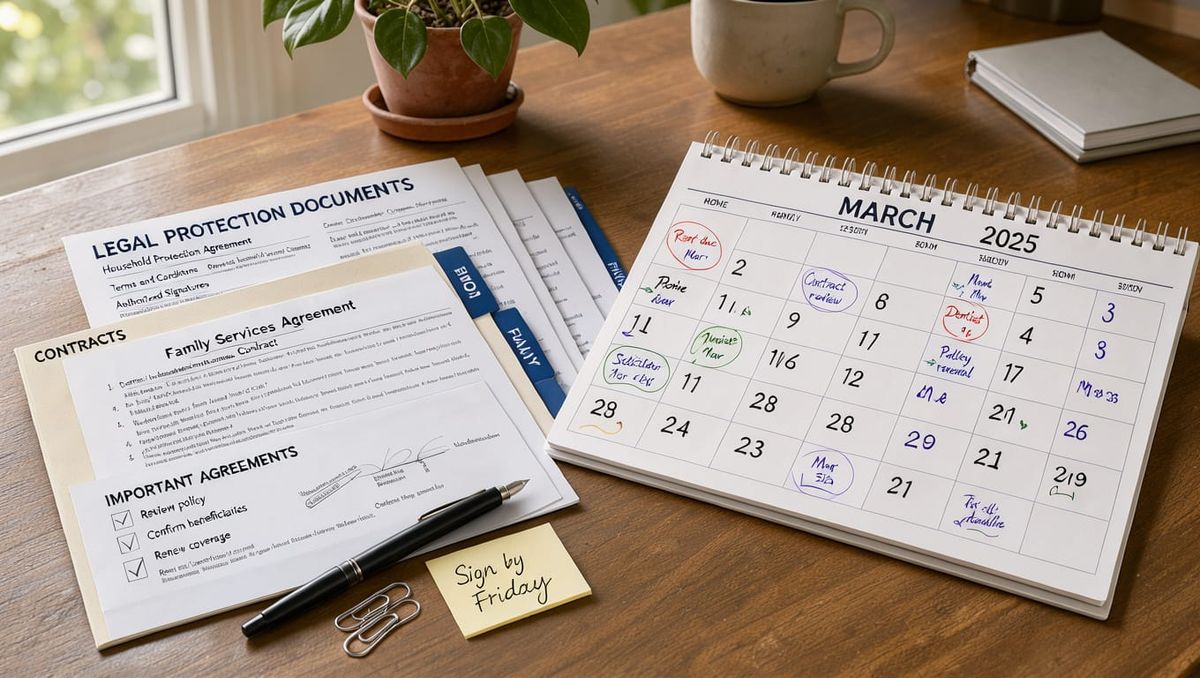
Legal help can matter whenever a routine problem threatens our housing, income, safety, property, or ability to make important decisions. Legal protection can help us understand our options before a small concern grows into a crisis. Civil legal aid means free or low-cost legal assistance for eligible people with civil legal problems.
In the United States, problems with a landlord, employer, debt, or family decision can affect daily life. A legal problem may be worth discussing before the next deadline makes it harder to manage. We can start by keeping a clear record of what happened and when.
Key Takeaways
- Routine housing, work, debt, safety, and property concerns can involve legal rights.
- Civil court does not guarantee a free lawyer for every person.
- Legal aid eligibility depends on the person and the organization.
- Deadlines and local rules can shape our next step.
- Save notices, contracts, messages, and key dates as soon as a problem starts.
Why everyday civil problems can need legal help
A person facing a civil lawsuit is not automatically entitled to a free lawyer just because paying for one is difficult. Civil legal assistance may still be available through legal aid, clinics, or other services, depending on a person’s needs and eligibility.
In civil court, people generally do not have the same right to appointed counsel that applies in many criminal cases. Eligibility for free civil representation depends on the organization, the legal issue, income, location, and other rules.

Learn about Options for Accessing Legal Assistance and Preparing for Everyday Legal Challenges
Civil matters do not automatically include a free lawyer
A civil case can involve housing, family matters, debt, or a contract dispute. A court may hear the case even when one side cannot afford a lawyer. Some legal aid groups serve people who meet income rules, while others focus on certain issues or communities.
The Legal Services Corporation’s 2022 study found that low-income Americans received no or insufficient help for 92% of civil legal problems with substantial impacts. It also found that 55% said their problems substantially affected them. The Justice Gap Study summary describes these findings.
How cost concerns can delay legal assistance
Cost is one reason people may wait to ask for help. A 2024 survey of 2,096 U.S. adults found that 56% mistakenly believed they could get free legal representation in civil cases if they could not afford a lawyer. Another 18% were unsure, and 67% of adults ages 18-34 held that mistaken belief.
In 2026, the average U.S. lawyer hourly rate is $362. Average rates range from $132 for juvenile law to $484 for corporate litigation, and from $205 in West Virginia to $506 in Delaware. These figures describe broad averages, not a quote for any individual lawyer.
Free legal representation is not automatic in civil court, but cost alone does not tell us whether help is available.
Before ruling out help on cost grounds, ask whether a short consultation or limited-scope service is available.
Everyday situations where legal protection can matter
A notice to leave, a collection letter, or a sudden job loss can create a legal problem before we realize there is a deadline to act. A prompt consultation can help us understand our rights, choices, and next steps, without promising a particular outcome.
Deadlines depend on the type of claim and the state, so we should treat a notice or court paper as time-sensitive. A 2024 survey found that 59% of people with a civil legal matter in the prior three years did not seek help from an attorney.

Learn about Options for Accessing Legal Assistance and Preparing for Everyday Legal Challenges
Facing eviction or foreclosure threats
An eviction defense lawyer or housing clinic can help us review notices, court papers, payment records, and possible responses. In the survey, 31% of people threatened with eviction or foreclosure did not seek legal help, while 35% sought help but did not receive it.
Texas has specific eviction steps that do not apply nationwide. After the notice-to-vacate period passes, a landlord files in the justice court where the rental property sits. The tenant must receive suit notice at least four days before trial.
In Texas, the hearing is set no sooner than 10 days and no later than 21 days after filing. A tenant must request a jury trial at least three days before trial. A tenant who does not file an answer must attend the hearing or risk a default judgment.
A tenant appealing a Texas eviction judgment must swear the appeal is in good faith and not for delay. The Texas eviction court timeline can help us identify the rules that apply to that state example.
Responding to creditors and collection agencies
Creditor contact can raise questions about the amount owed, who owns the debt, or whether a court claim is underway. In the survey, 63% of people contacted by creditors or collection agencies did not seek legal help.
Women and men reported different rates of seeking help for civil matters: 66% of women and 53% of men did not seek help. Among people contacted by creditors, 79% of women and 48% of men did not seek help.
Dealing with job loss or unfair treatment at work
A sudden firing can affect income and raise questions about pay, leave, discrimination, or a written agreement. A workplace lawyer or legal aid office can help us sort out what records matter. In the survey, 56% of people fired from a job did not seek legal help.
Recovering after a natural disaster
Disaster recovery may involve rental agreements, repairs, benefits, or disputes over property. We can ask for help when forms or notices leave us unsure about a response. Of people affected by a natural disaster, 52% did not seek legal help.
Addressing scams and identity theft
Scams can lead to debt, lost money, or misuse of personal information. Adults ages 55 and older who experienced scams or identity theft reported especially low use of legal help: 82% did not seek it.
For personal injury claims, listed filing deadlines range from one to six years by state. Exceptions may apply to government claims, delayed injuries, or wrongful death. A claim against a federal agency under the Federal Tort Claims Act must first reach that agency in writing within two years after the claim arises. After a written denial, the claimant has six months to file suit.
Seeking help with domestic violence and safety concerns
When domestic violence threatens safety, a legal aid office or victim service group can help us learn about legal options and safety planning. A consultation can clarify which steps fit the situation and local rules. We should avoid waiting for a crisis to gather important records.
People may not seek help because they think they can handle a problem alone, do not see it as serious, or doubt a lawyer can help. Among people who did not seek help, 33% thought they could manage alone, another 33% thought the issue was not serious enough, and 23% doubted legal help would work.
Adults also differ in how easily they can find legal representation: 38% of those ages 18-34 were unsure, compared with 27% ages 35-44, 29% ages 45-54, 28% ages 55-64, and 19% ages 65 and older.
We can take a few first steps while deciding whom to contact:
- Keep the notice, letter, or other paper that started the problem.
- Record dates, names, phone calls, and other contacts.
- Preserve relevant messages, contracts, and payment records.
- Ask promptly about deadlines that may apply.
For an injury claim involving a federal agency, mark both the two-year claim deadline and the six-month post-denial filing window.
Protecting agreements, property, and personal information
A written agreement and an organized record of what each person did can make a disagreement easier to assess. Clear records can show what was promised, when work took place, and whether payment was made.
Keeping the agreement, payment records, and messages together gives us a useful starting point when a deal breaks down. That record may also help a legal professional spot questions that need a closer review.

Learn about Options for Accessing Legal Assistance and Preparing for Everyday Legal Challenges
Using contract enforcement when an agreement breaks down
Contract enforcement may matter when a friend does not repay a personal loan or a contractor leaves work unfinished. We can keep the signed agreement, receipts, bank records, and communications in one folder. A dated note of key conversations can add useful context.
Written agreements are useful for small projects as well as large ones. They can spell out the work, due dates, payment terms, and what happens if either person cannot follow through. If the terms are unclear, we should not assume that memory alone will settle the dispute.
Safeguarding intellectual property rights
Intellectual property rights protect different kinds of work and business assets. Patents cover inventions, trademarks identify the source of goods or services, copyrights protect creative works, and trade secrets depend on keeping valuable information confidential.
The U.S. Patent and Trademark Office administers federal patent and trademark systems. Its intellectual property guide explains how the four protections differ. One form of protection does not cover every kind of idea, name, or creative work.
Building data privacy safeguards into everyday practices
Data privacy safeguards start with sharing less personal information than a task requires. We can use strong, unique passwords and turn on multifactor authentication where available. Those steps help reduce the harm if one password or account is exposed.
We can also learn how to report suspected identity theft before a problem arises. Keep copies of important account notices, and use official contact details when reporting a concern. A hurried request for private data deserves a pause, even when it looks familiar.
Before sharing sensitive information, check whether the recipient genuinely needs it and how it will be protected.
Preparing for responsibility, authority, and compliance
Insurance can help with certain covered losses, but it does not replace a plan for who can act or what rules apply. Preparation matters when a person or small group must make decisions under pressure.
Liability insurance and legal advice serve different purposes. A policy may pay for covered claims, while legal advice can help us understand duties, choices, and risks.
Reviewing liability insurance alongside legal risks
We can review policy limits, covered situations, exclusions, and notice requirements before a claim arises. A policy may not cover every dispute, and a late notice can affect how the insurer responds. Legal advice can help us assess questions the policy itself does not answer.
Keeping up with regulatory compliance
Regulatory compliance means following rules that apply to our work or group. Individuals and small organizations should identify relevant federal, state, and local requirements. A simple calendar can track renewals, reports, permits, and other due dates.
Rules may change when our work, location, or services change. We can keep key permits and filings together, then review the calendar when a new activity begins. This makes it easier to spot a missed renewal before it disrupts daily work.
Using a power of attorney when someone needs authority to act
A medical power of attorney is a document naming someone to make medical decisions if its maker cannot. A living will is different: it records which medical procedures a person does or does not want.
Texas provides one example of how these documents work. A Texas medical power of attorney generally lasts until the maker revokes it, becomes competent again, or reaches its stated expiration date. When an incapacitated patient has no document naming a decision-maker, Texas law gives priority for certain treatments to the spouse, adult children, a majority of parents, then the nearest living relative.
We should confirm our own state’s rules before signing a document. Review delegated authority and key policy documents while the person who may need them can still discuss their preferences.
Choosing a path to resolution and affordable support
The right next step depends on the dispute’s urgency, the amount at stake, and whether an affordable service can handle that specific issue. A proportionate response may begin with a direct talk, but deadlines can make waiting risky.
Small-claims limits, filing fees, and procedures depend on the state and claim. We can compare informal dispute resolution, court, legal aid, and prepaid plans before choosing a path.
Considering dispute resolution before court
A direct discussion can be worth trying when both sides can speak safely and the disagreement is clear. Mediation gives each side a chance to work toward an agreement with help from a neutral person. Neither option should delay a court deadline or replace advice when a legal right may be at risk.
Small-claims court handles disputes such as unpaid personal loans, unreturned security deposits, minor property damage, unfinished contractor work, and breach of contract. The process is generally less formal than higher courts, and many people handle cases without an attorney.
As of November 2, 2026, small-claims dollar limits range from $2,500 in Kentucky to $25,000 in Delaware and Tennessee. Filing fees also vary by state and claim type, from about $4-$20 in South Dakota to $35-$256 in Alabama. Local courts can provide current fee details.
A successful plaintiff may receive certain court costs and attorney fees only when law or contract allows them. The amount at stake is not the only factor; a complicated dispute may call for legal advice even below the court’s limit.
Finding free or low-cost legal help through California resources
The California Judicial Branch offers a directory of free or low-cost legal help, including legal aid groups and court self-help centers. We can look for help by county, issue, or service type. Each organization sets its own eligibility rules and may serve only certain cases.
When we contact a service, we can explain the problem, where it happened, and any deadline we know about. We can also ask whether the office offers advice, document help, or representation. A referral does not always mean that a group can take the case.
Understanding services available from Riverside Legal Aid
Riverside Legal Aid is a nonprofit that offers free services to qualified low-income Riverside County residents. It serves Riverside and Indio, as well as the Coachella Valley. Its services include consultations and document preparation.
The group offers limited-scope representation in eviction defense, family law, conservatorships and guardianships, small estate probate, and consumer debt defense. It also runs bankruptcy clinics. Limited-scope help means the service may cover only part of a case, rather than every court step.
Prepaid legal plans offer another kind of support, but plan limits and exclusions shape what members can use. MetLife Legal Plans, for example, may cover family law, real estate, and civil litigation, subject to plan limits and exclusions.
LegalShield lists three plans. Basic costs $39.95 per month or $431.46 with annual billing. It covers the member and spouse, includes document review up to 15 pages, and includes will and power-of-attorney preparation, traffic-ticket representation, civil-trial defense, and consumer-dispute advice.
Advanced costs $49.95 monthly or $539.46 annually. It covers the member, spouse, and eligible child dependents, with document review up to 25 pages. It adds annual will updates, help navigating an uncontested divorce, and rental-lease review and negotiation for tenants.
Premium costs $59.95 monthly or $647.46 annually. It includes document review up to 35 pages, trust establishment, and help with simplified probate. Benefits may require an active membership for 10-90 days, depending on the plan.
Before choosing a legal-aid group or plan, we can ask:
- What eligibility rules apply?
- Does the service cover this kind of problem?
- Which exclusions or waiting periods may apply?
- Does help include advice, document work, or representation?
A plan’s monthly price does not show whether it covers a problem that has already started. Covered matters, exclusions, and waiting periods can change what help is available.
Before enrolling in a plan or proceeding in court, confirm the current terms, local filing fees, and the exact help available for your case.
Conclusion
We do not need to know the answer to every legal question before asking where to begin. One informed conversation can help us see which options fit our facts, timeline, and needs.
That first conversation does not commit us to a lawsuit, a service, or a particular choice. We can bring a short timeline and ask what step matters most now.
Choose one trusted legal-aid, court self-help, or attorney resource and contact it with your timeline and key documents.
FAQ
What should I bring to an initial conversation with a lawyer or legal-aid office?
Bring notices, agreements, contact details, payment records, and a brief timeline with key dates. These items help the office understand what happened and spot time-sensitive issues. We can also note what outcome we hope to reach and which questions feel most urgent. Keep originals safe and bring copies when possible.
Can I handle a small-claims case without an attorney?
Yes, many people handle small-claims cases without an attorney because the process is generally streamlined. We should check our state’s dollar limit, local filing rules, and court forms before starting. A dispute with complex facts or important legal questions may still call for advice. Filing fees and the types of allowed claims also vary by location.
How do I know whether a legal plan covers a problem I already have?
Check the plan’s covered matters, exclusions, and any 10-90-day active-membership period before relying on it. A plan may cover some legal topics but exclude a specific dispute or offer only limited help. We should ask whether an existing problem qualifies and whether the service includes advice, document review, or representation.
Does liability insurance pay for a lawyer in every dispute?
No, liability insurance does not pay for a lawyer in every dispute. Coverage depends on the policy’s covered events, limits, exclusions, and notice requirements. We can review the policy language to see what claims it addresses and when we must report one. Legal advice may help with questions outside the policy’s scope.
What is the difference between a medical power of attorney and a living will?
A medical power of attorney names someone to make medical decisions if its maker cannot decide. A living will records which medical procedures the person does or does not want. These documents address different parts of medical decision-making, and state rules can affect how they work. We should use the forms and signing rules for our state.
What should I do if I cannot afford a lawyer in California?
Start with the California Judicial Branch’s free or low-cost legal-help resources, then check eligibility with each service. Some groups focus on certain legal issues or serve people in specific counties. We can explain the problem and any known deadline when we contact them. Court self-help centers may also offer forms and guidance.
Learn about Options for Accessing Legal Assistance and Preparing for Everyday Legal Challenges
"Being prepared for everyday legal challenges is an important part of protecting your family. Discover the other areas of personal protection in our guide to the 5 Pillars of Personal Protection."


Comments ()